From WhatsApp Orders To A Real Digital Business.
A handcrafted jewellery brand that ran entirely on WhatsApp and Facebook now has a website, a mobile app, and a dashboard built for someone who isn't a developer.
The Challenge.
Maya Bazar's entire business ran through Facebook posts and WhatsApp conversations. Every enquiry meant a manual reply. There was no product catalog, no inventory system, no customer database, and no order tracking — just the owner, coordinating everything by hand. It worked, but it couldn't grow past what one person could manage in their messages.
The Discovery Phase.
Before writing any code, we spent time understanding how Maya Bazar actually operated — how orders came in through WhatsApp and Facebook, what the owner tracked from memory, and where the real bottlenecks were. The goal wasn't to design an ideal system in the abstract; it was to understand this specific business well enough that the eventual system would feel obvious to use, not like software bolted on from outside.
The Solution.
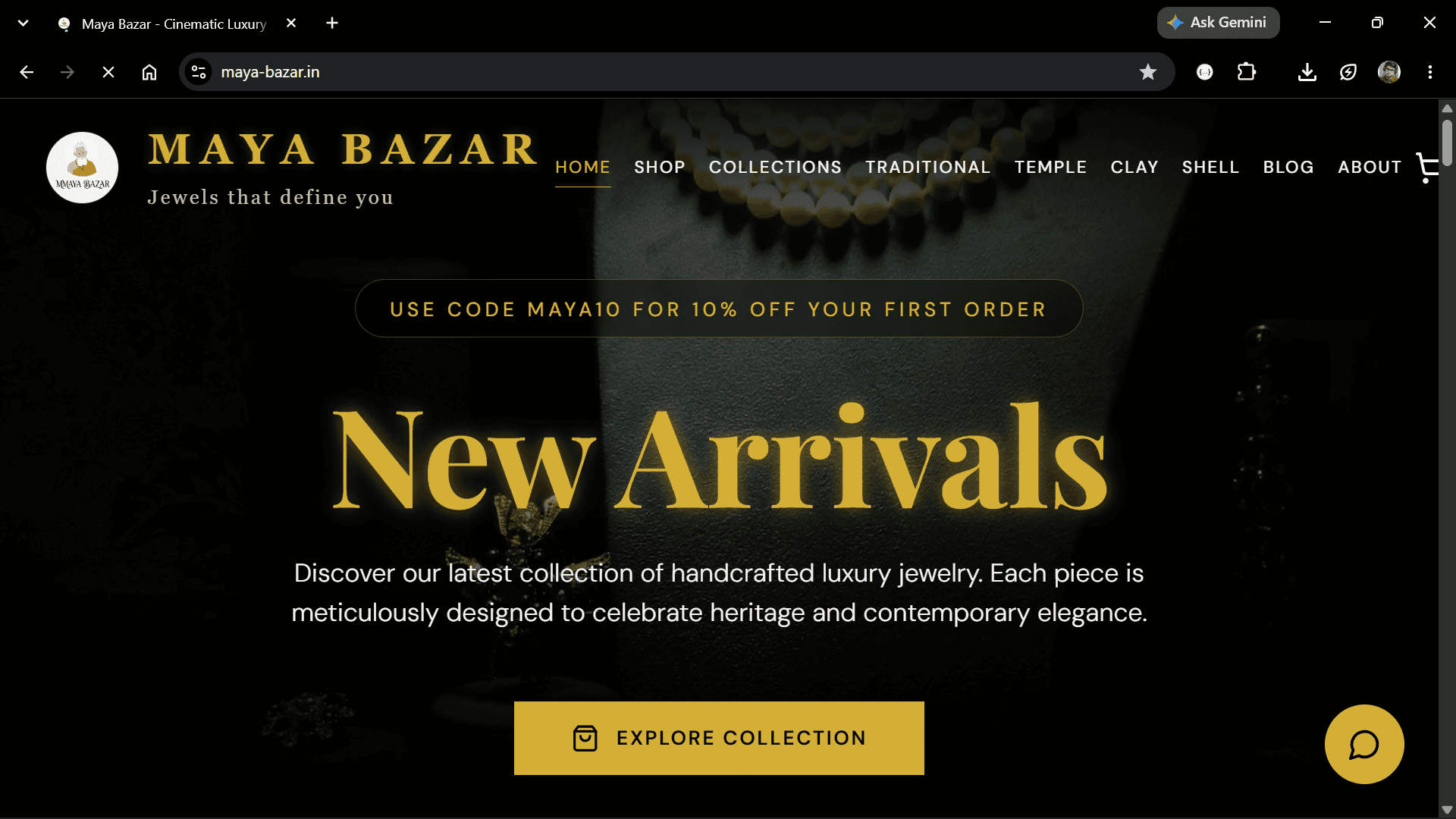
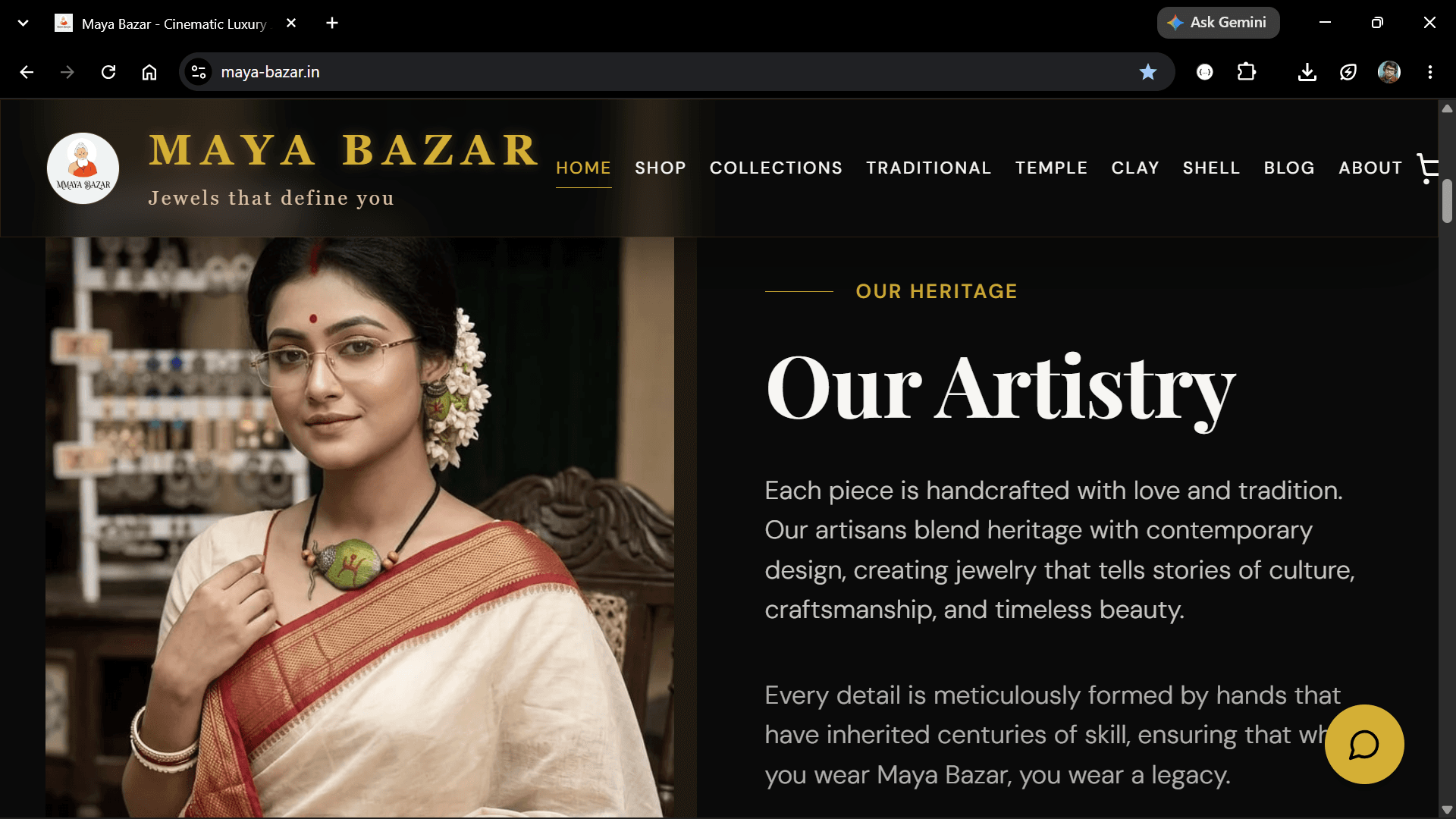
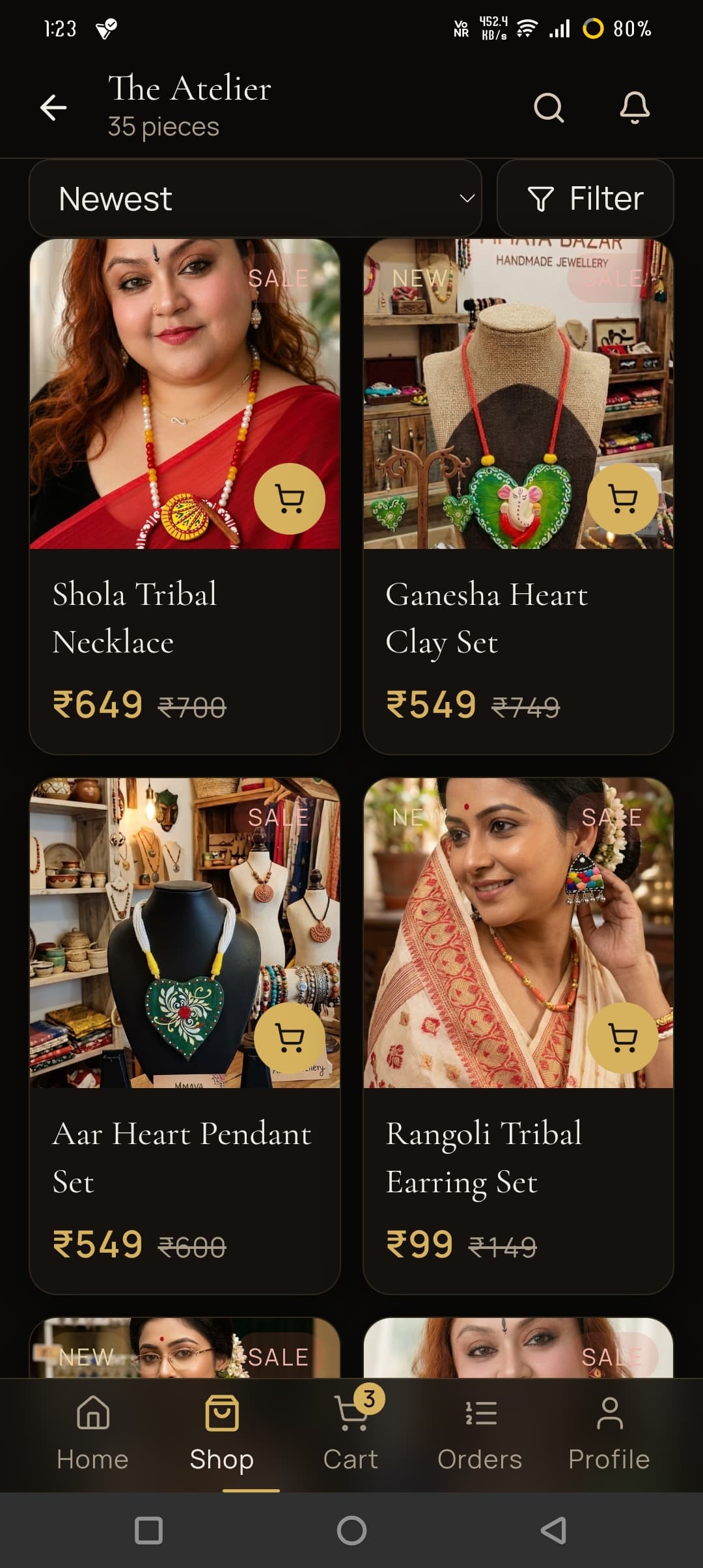
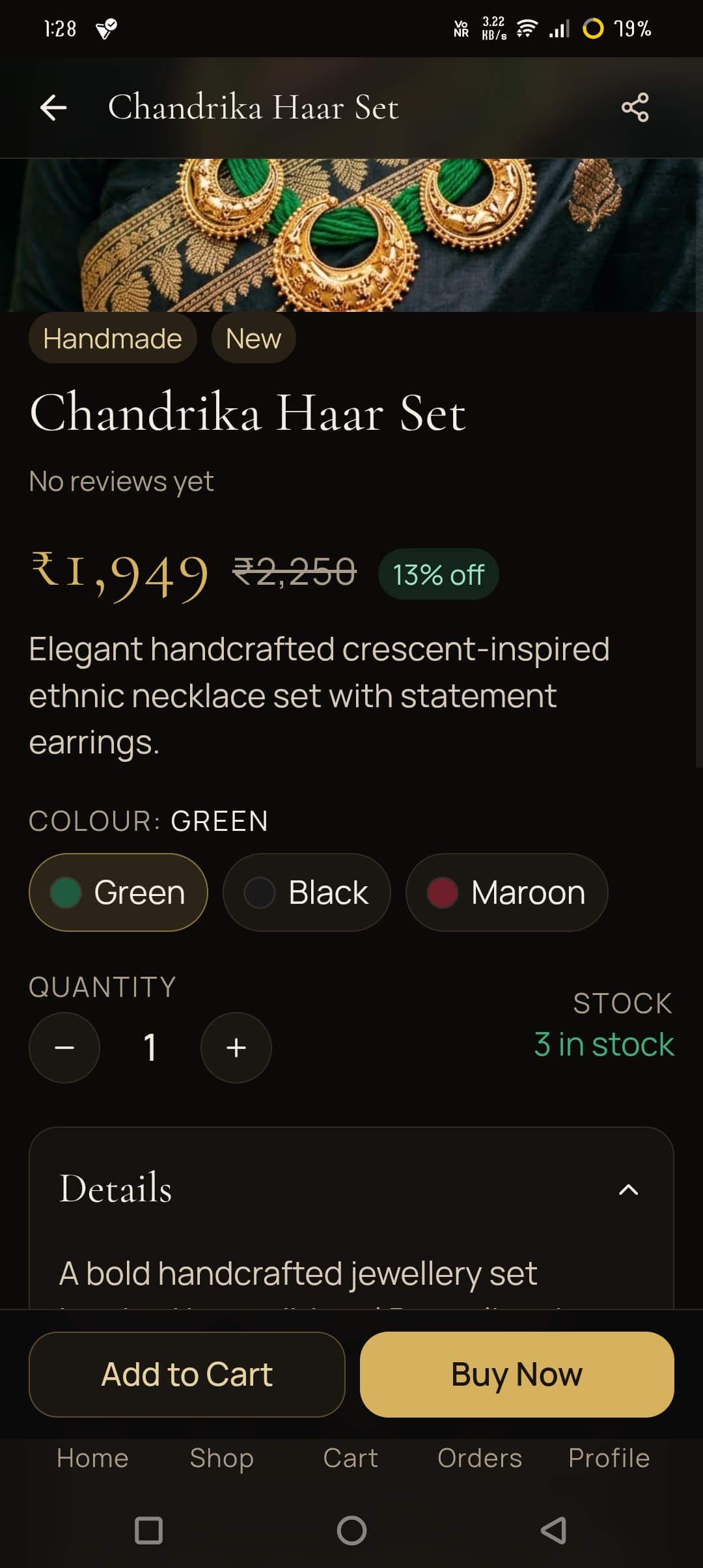
We built two connected systems: a customer-facing website and mobile app, and a separate business dashboard for running the operation day to day. Customers can browse the full product catalog by category, search by material or style, save items to a wishlist, check out securely, and track their order from confirmation to delivery. Behind the scenes, the owner manages products, pricing, stock, orders, and customers from one dashboard — no developer required, no training needed beyond what it takes to use WhatsApp.
Implementation.
We built the customer-facing website and mobile app first, then the admin dashboard, connecting all three to the same underlying product, order, and customer data so nothing had to be entered twice. Each piece was tested against real product data before launch, and the mobile app went through Google Play Store review before going live.
The Outcome.
The website is live. The mobile app is published on the Google Play Store. The dashboard is in daily use, and real customers are placing real orders through it today. The goal was never a short-term sales spike — it was building the digital foundation the business needed to keep growing on its own terms.
A Closer Look.
A privacy-reviewed tour of the real product — the customer app, the owner's dashboard, and the website. Tap any screen to enlarge.
The Customer App
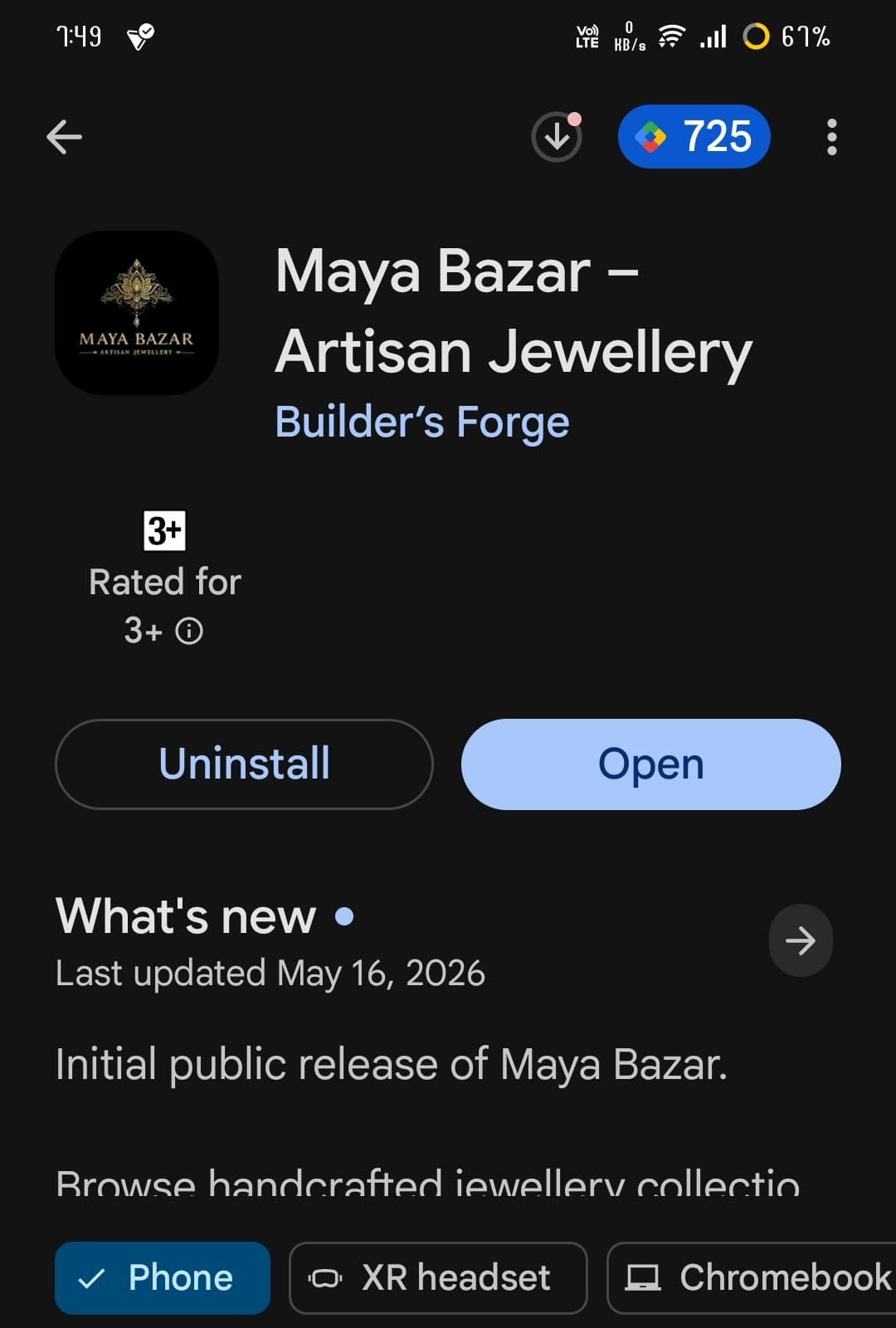
Live on the Google Play Store — real customers order through it today.
The Owner's Dashboard
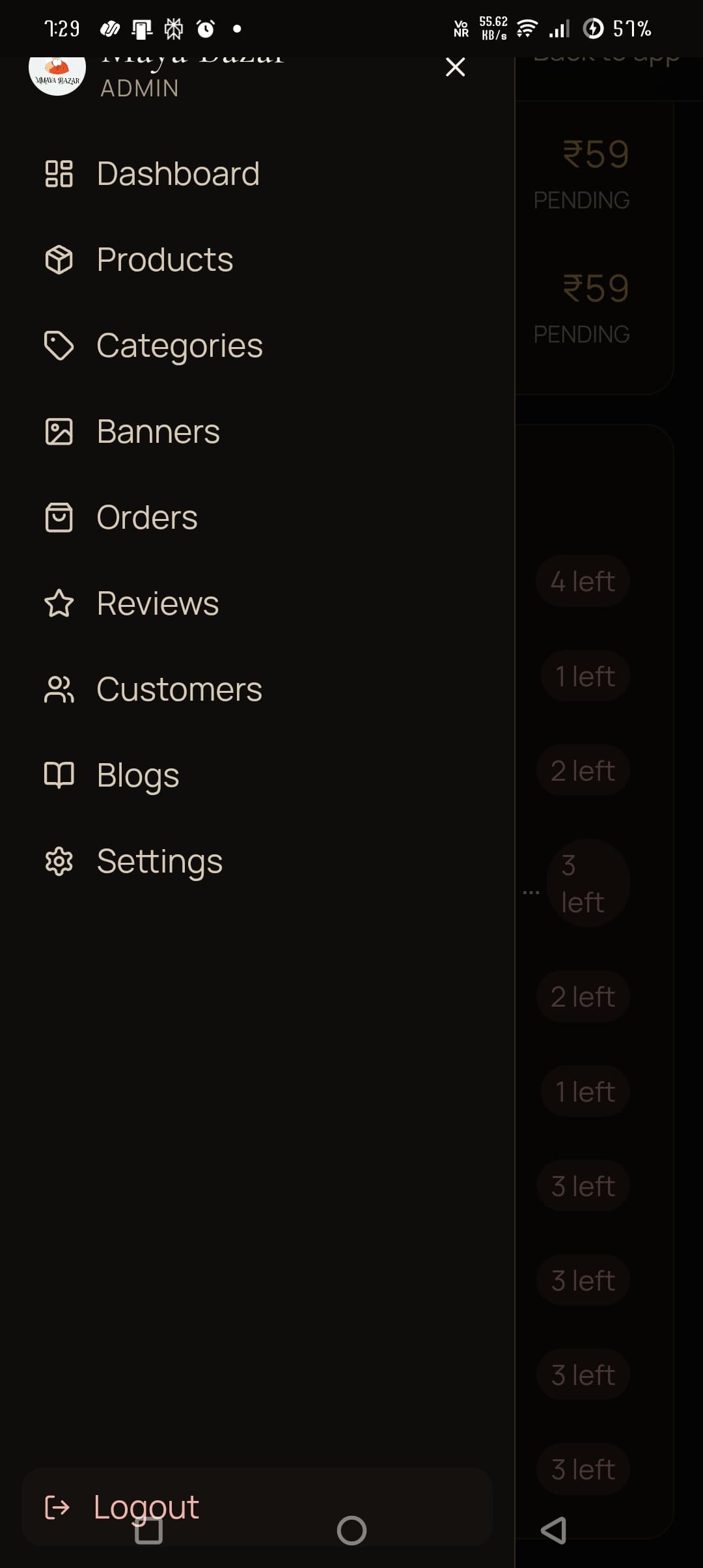
Run by a non-technical owner — products, categories, banners, and content, all self-serve.
The Website & The Proof
The customer website, plus the live Google Play Store listing.
“My business used to live inside my chat messages. Now it has a real website and a real app on the Play Store, and I run everything from one dashboard — my products, my orders, my customers — without calling anyone for help. I'm not a technical person at all, but this was made for how I actually work. Customers order directly, and I just see it and pack.”
Lessons Learned.
The biggest lesson wasn't technical — it was that the admin side needed just as much design attention as the customer-facing side. An owner running a business alone doesn't have time to learn a complicated system, so the dashboard went through several rounds of simplification based on how the owner actually wanted to work, not how a typical e-commerce admin panel is usually built.
Key Takeaway.
We build systems for business owners, not for coders.
Considering Something Similar?
Tell us where your business is today — we'll take it from there.